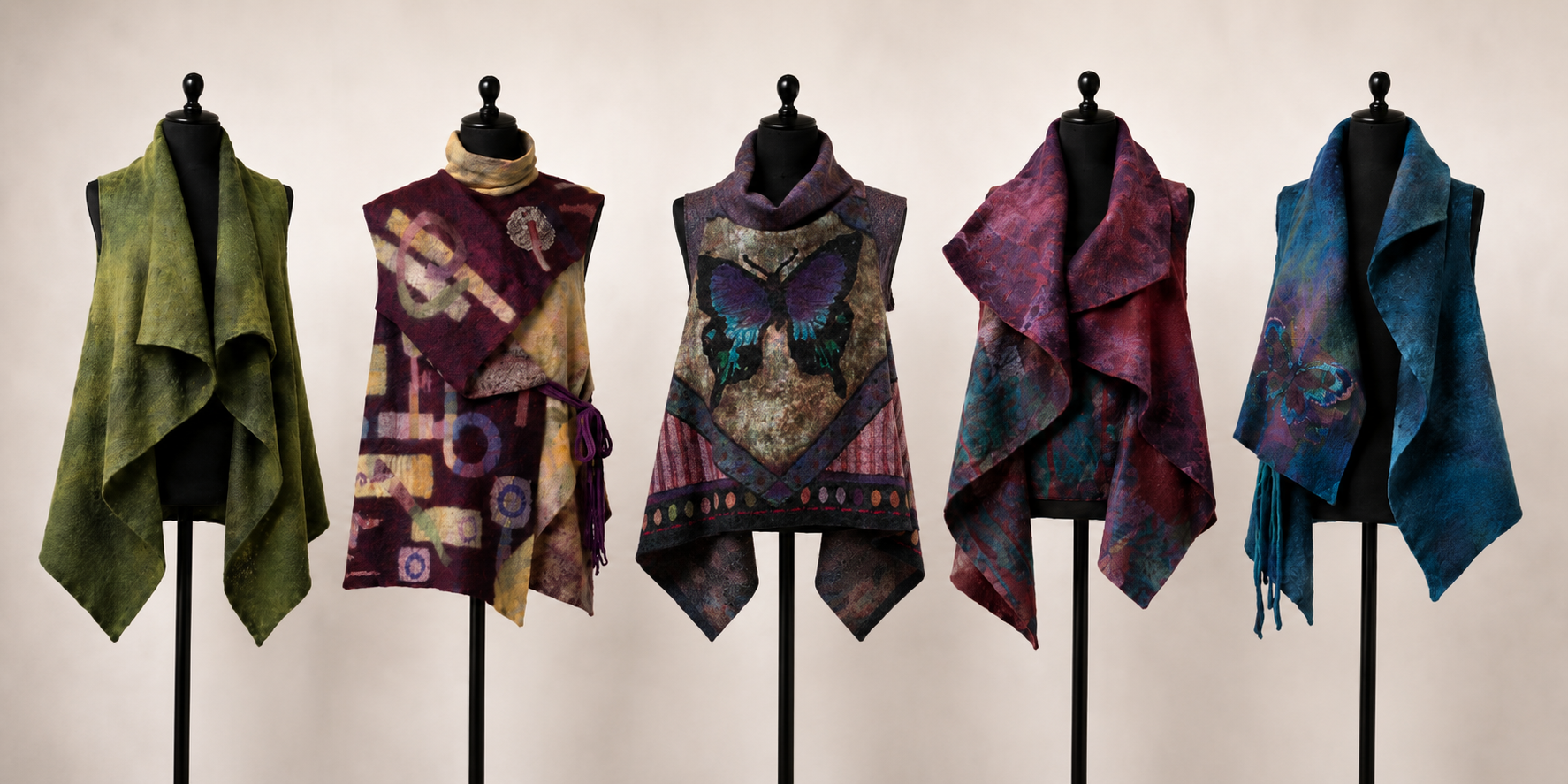
.jpg)
From Flat Felt to Wearable Clothing
Learn how a simple flat layout can become a real felt garment. This course helps you understand the transition from scarf or shawl making to wearable felt clothing — step by step, without unnecessary complexity.
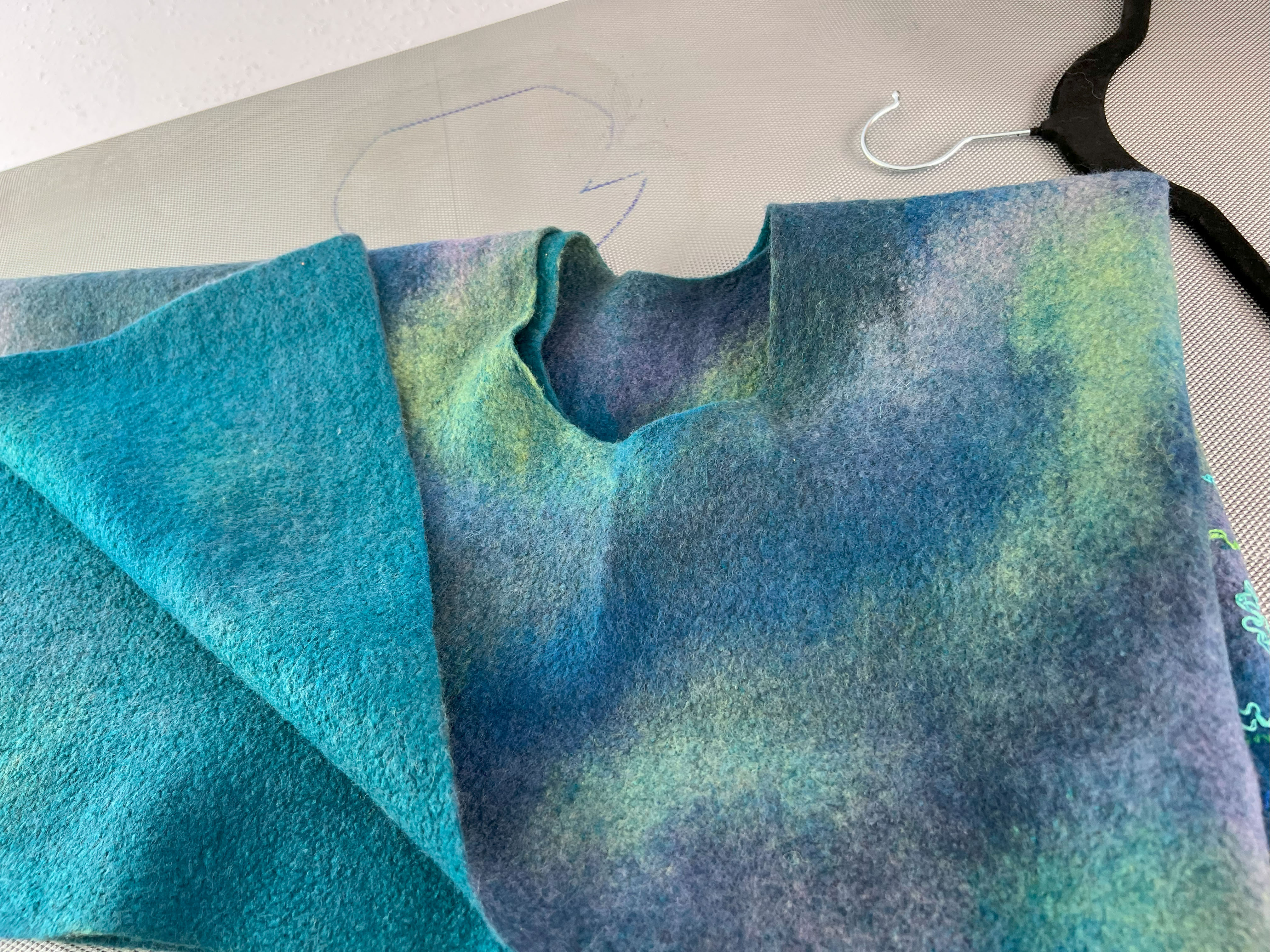
Clean Edges, Armholes and Shape Control
Julia Struzh shows how to plan and felt the details that matter most: clean edges, stable armholes, controlled shrinkage and final shaping. These are the techniques that make a felt garment look intentional, elegant and wearable.
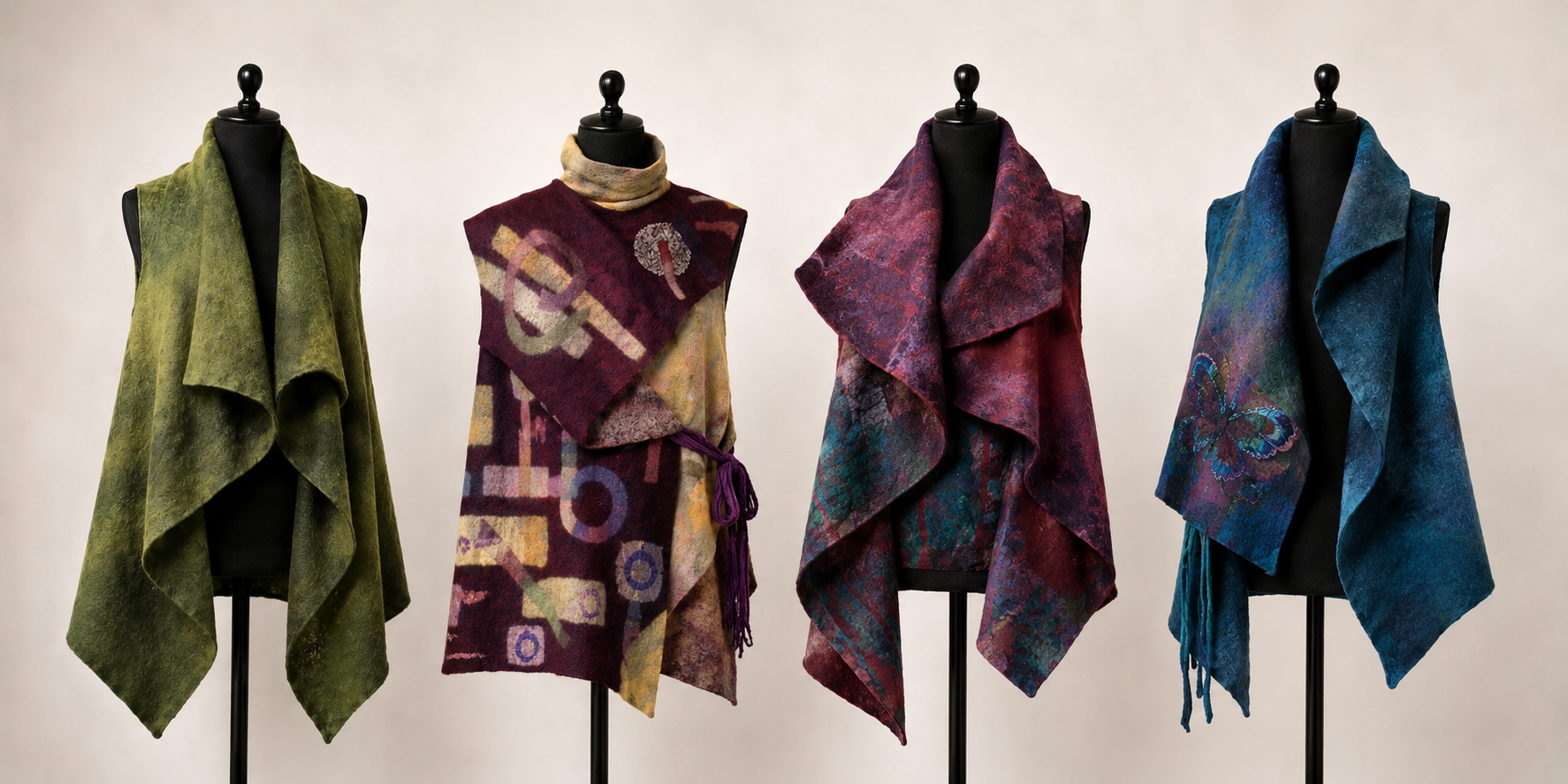
One Vest, Many Design Possibilities
The transforming vest is more than one project. It teaches a logic you can use again: how to work with proportion, openings, surface design and final form to develop your own felt vests, wraps and simple garments.
About the course
The Transforming Felt Vest is a practical course for feltmakers who are ready to move from flat felt into wearable clothing. In this course, Julia Struzh shows how a simple geometric layout can become a light, versatile felt vest. Step by step, you will learn how to plan the shape, calculate shrinkage, build the layout, create clean edges, form armholes, felt the surface, and bring the vest to its final size and shape. The project is manageable, but the learning is deep. You are not only making one vest — you are learning the logic of felt clothing: how wool behaves around openings, how edges can be controlled, how shrinkage changes the form, and how final ironing and stretching help the felt become truly wearable. This course is especially useful if you already make scarves, shawls or flat felt pieces and want to understand how to take the next step toward garments. Julia’s method is calm, precise and structured, giving you a clear path from a flat surface to an elegant piece of wearable felt. By the end of the course, you will have not only a transforming vest, but also new confidence in working with shape, proportion and construction in felt.
.JPG)
Materials, Tools and Preparation
For this course, you will work with familiar wet-felting materials and a few helpful tools for precision and shaping. You will need fine wool for felting, decorative fibres or fabrics for surface design, material for making the template, bubble wrap or felting film, netting, soap, towels, water sprayers and basic sewing tools. Julia also works with an electric sander to help the fibres connect efficiently and evenly. Because this is a garment project, several tools are especially important: a reliable template material, measuring tools, threads for edge control, and an iron for the final shaping. These simple details help transform the flat layout into a clean, wearable vest with stable armholes and beautiful edges. A full materials list is included inside the course, so you can prepare everything before starting the project.
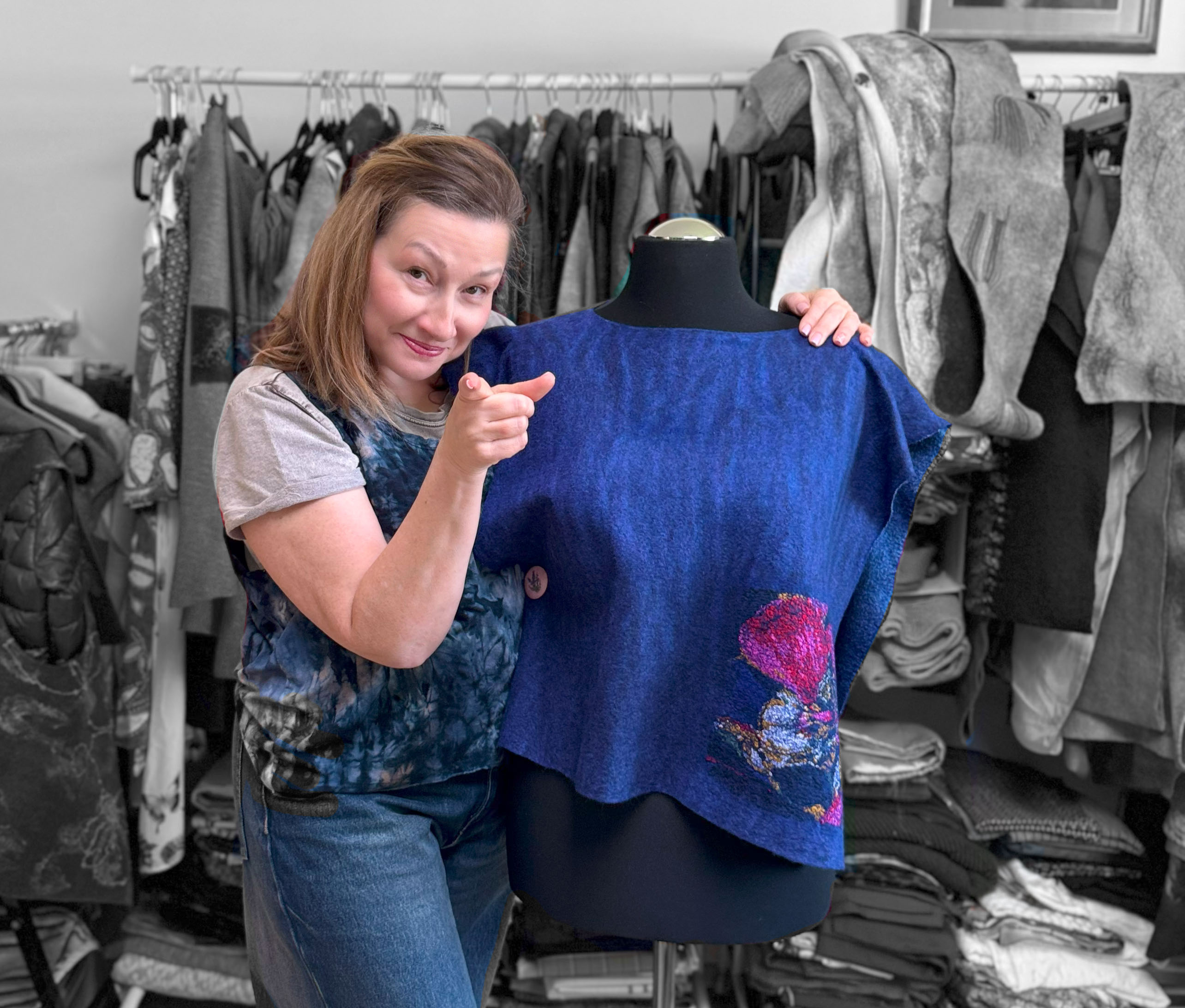
Meet Julia Struzh
Julia Struzh is a felt artist and teacher known for her clear, structured approach to wearable felt. Her work is precise, practical and deeply thoughtful. Instead of treating felting as a mysterious process, Julia explains every step logically: how wool shrinks, how edges behave, how openings can be controlled, and how a flat layout can become a real garment. In her courses, Julia combines technical clarity with creative freedom. She teaches feltmakers to understand the construction behind the beauty — so they can not only follow one project, but also use the method for their own designs. The Transforming Felt Vest reflects Julia’s way of teaching perfectly: calm, detailed, and full of small professional decisions that make the finished piece clean, elegant and wearable.
Curriculum
-
-
(Included in full purchase)
Welcome to the Transforming Vest Course
-
(Included in full purchase)
Course Handout for Download
-
(Included in full purchase)
-
-
(Included in full purchase)
Julia's Favorite Felting Tools
-
(Included in full purchase)
-
-
(Included in full purchase)
The Rectangular Vest: Pattern and Measurements
-
(Included in full purchase)
-
-
(Included in full purchase)
Starting the Layout: Working in Sections and the Silk Layer
-
(Included in full purchase)
-
-
(Included in full purchase)
Second Layer: Wool Layout and Density Control
-
(Included in full purchase)
-
-
(Included in full purchase)
Helper Threads: Securing the Shape
-
(Included in full purchase)
-
-
(Included in full purchase)
Close-Up Details: Fibres, Edges and Transitions
-
(Included in full purchase)
-
-
(Included in full purchase)
Third Layer – Placement, Overhang & Step Correction
-
(Included in full purchase)
-
-
(Included in full purchase)
Placing the Armhole: Template and Positioning
-
(Included in full purchase)
-
-
(Included in full purchase)
The First Half Is Complete
-
(Included in full purchase)
-
-
(Included in full purchase)
Water, Soap and Patience
-
(Included in full purchase)
-
-
(Included in full purchase)
Tango with the Electric Sander
-
(Included in full purchase)
-
-
(Included in full purchase)
When the Fibers Find Each Other
-
(Included in full purchase)
-
-
(Included in full purchase)
Stabilizing the Surface: Working with the Sander
-
(Included in full purchase)
-
-
(Included in full purchase)
Creating a Precise Edge with Thread Technique
-
(Included in full purchase)
-
-
(Included in full purchase)
The Great Transformation Begins: Shrinking and Stabilizing
-
(Included in full purchase)
-
-
(Included in full purchase)
Final Shaping: Ironing and Stretching
-
(Included in full purchase)
-
-
(Included in full purchase)
Final Words
-
(Included in full purchase)
Ready to Move from Flat Felt to Wearable Clothing?
You already know how to create beautiful felt surfaces. Now learn how to shape them into a real garment — with clean edges, stable armholes, controlled shrinkage and a professional finish.
€85,00